



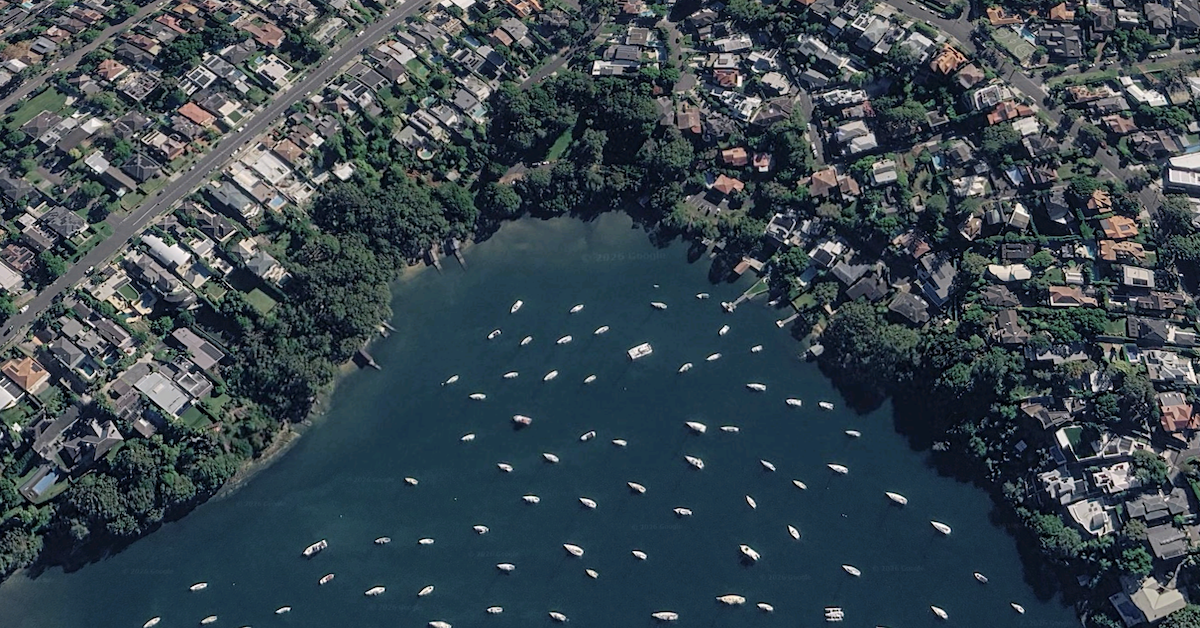
The illegal removal of hundreds of trees at Woodford Bay has underscored the vulnerability of public bushland, showing how vegetation can be removed in days while investigation, legal proceedings and regeneration can continue for years.
Following a major legal milestone in the NSW Land and Environment Court, the case is a reminder to residents and contractors to establish land ownership and check what approvals are required before removing native vegetation.
The Court convicted a Sydney contractor over three offences linked to clearing public land beside Woodford Bay, imposing fines totalling $187,500. The judgment also provided for Lane Cove Council’s legal costs and $11,660 in investigation costs.
Between 8 and 22 November 2023, 287 trees were removed across about 1,210 square metres of Council land, a road reserve and part of Griffith Park. A member of the public reported the clearing on 23 November 2023, prompting a Council ranger to visit the site. Council records checked that day showed no approvals, permits or consents had been issued for tree removal on the land.
Environmental Harm Extended Beyond the Trees
Expert evidence presented to the Court documented substantial environmental damage at the site. Before the clearing, the land contained three recognised vegetation communities: Coastal Sandstone Foreshores Forest, Estuarine Swamp Oak Forest and Mangrove Forest.
Expert assessment found that most, if not all, of the trees were alive before the clearing and that their removal changed the natural ecology of the land. The clearing also greatly reduced the natural leaf-litter cover that protected an Aboriginal shell midden on the site, which is recognised as an Aboriginal heritage place.
The Woodford Bay site was subject to overlapping planning and biodiversity protections, as well as Aboriginal heritage considerations. The work involved far more than ordinary garden maintenance.
The Court noted that the offences involved overlapping planning and environmental controls on land zoned C2 Environmental Conservation. It assessed each offence at the lower end of the high range of objective seriousness.
The Court also considered the contractor’s early guilty pleas, cooperation and remorse, and noted changes he said he had since made to his business practices. Those changes included requiring written confirmation of approvals before accepting substantial clearing work.
A Resident Report Triggered Council’s Investigation
The case also shows the practical role residents can play in alerting Council to suspected damage on public land. Council began investigating after a member of the public reported the clearing on 23 November 2023.
A ranger attended the site that day, and Council subsequently gathered records, interviews and expert evidence. Lane Cove Council has also encouraged community members to report suspected tree vandalism as soon as possible after it is detected.
Council’s response has included environmental monitoring, legal proceedings and installation of a large banner at the site while vegetation regenerates. Council said the structure was intended to obscure the harbour outlook opened up by the clearing.
In January 2025, Lane Cove representatives joined neighbouring councils in meetings with NSW Planning Minister Paul Scully and Environment Minister Penny Sharpe to discuss stronger penalties and other measures to address tree vandalism.
A mayoral minute the following month called for continued advocacy for increased fines and other legislative measures.
Court Outcome Carries a Broader Warning
The Land and Environment Court imposed penalties for three offences arising from the clearing. After taking the guilty pleas and other sentencing factors into account, the Court imposed a total of $187,500 in fines.
The judgment also dealt with Council’s legal costs and ordered payment of $11,660 in investigation costs. The Court further ordered publication notices setting out the offences, guilty pleas and penalties.
A client’s request does not remove the need to confirm that the required approvals are in place before significant tree or vegetation work begins. The case also reinforces that public bushland can sit close to private property boundaries without forming part of the adjoining land.
Checking ownership, boundaries and approval requirements before work starts can help avoid serious legal consequences and environmental damage.
Lane Cove Council says a separate court proceeding relating to the same location remains before the Court.
Regeneration Will Take Far Longer Than the Clearing
Foreshore bushland contributes to Longueville’s local character and carries important ecological values. The Woodford Bay clearing occurred over less than two weeks, while Council continues to monitor regeneration at the site almost three years later.
The lasting lesson from the case is practical: confirm the property boundary, establish who owns the land and check what approvals are required before removing trees or native vegetation. Where substantial clearing appears to be taking place on public bushland, an early report to Council can help authorities assess the situation sooner.
Published 19-Aug-2026