



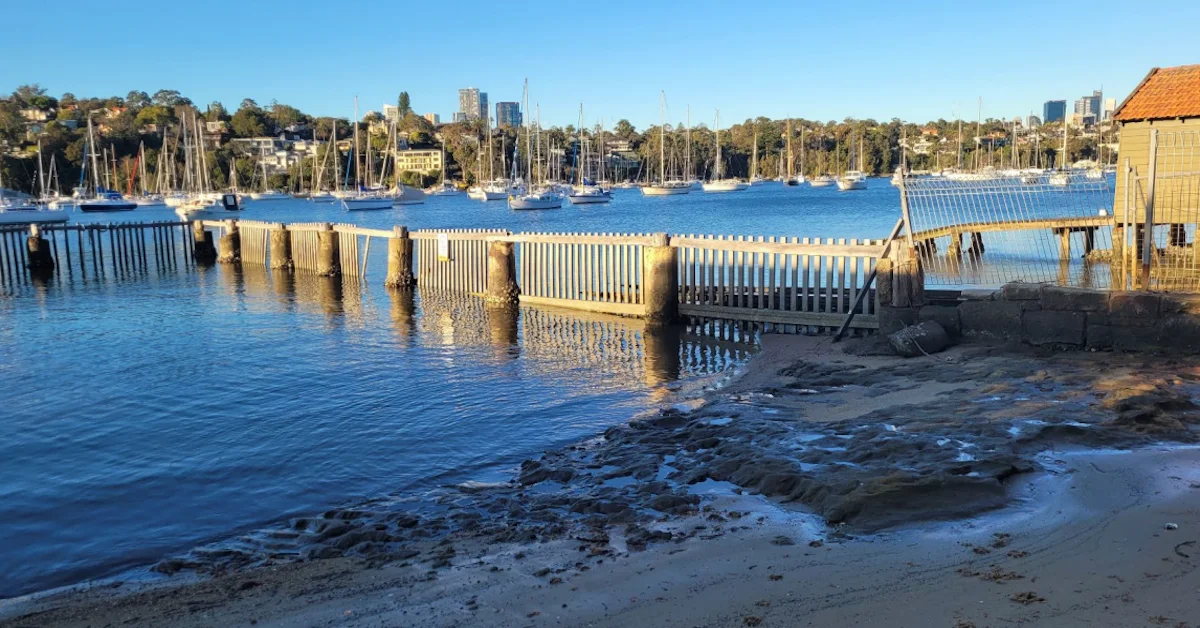
One of Sydney’s few surviving timber-paling harbour baths could disappear from Longueville’s Woodford Bay under a demolition proposal lodged after years of debate over the deteriorating swimming enclosure.
Lane Cove Council lodged DA118/2026 for 1 Dunois Street for the demolition of Jean Mitchell Lucretia Baths and associated structures. Neighbour notification began on 16 September 2026, with submissions invited within 28 days.
A rare piece of harbour history
Lucretia Baths is a locally listed heritage item extending about 45 metres into Woodford Bay. Heritage records describe it as one of three remaining timber-paling harbourside baths in Sydney, with significance linked to Longueville’s recreational history and the Woodford Bay landscape.
Plans for public baths in the area date to 1909, while residents sought a lease for baths near Dunois Street in 1928. Locals built the enclosure, and community members reconstructed it in 1968 and again in 1987. Council assumed the lease in 1992.
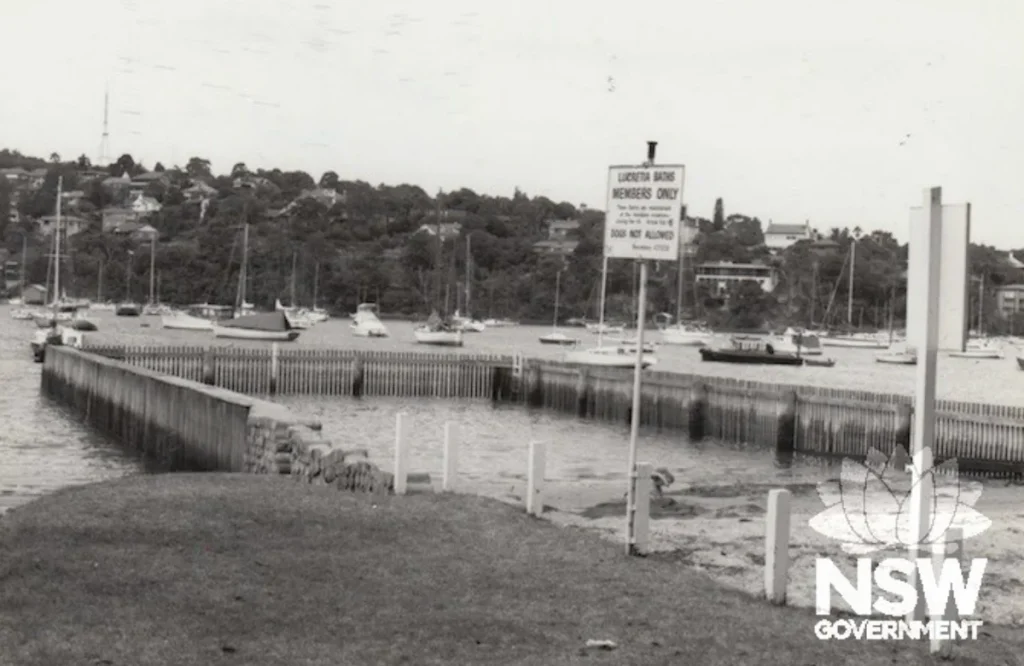
Rebuilding plan gives way
The demolition proposal marks a significant change from the direction residents backed three years ago. Consultation between December 2022 and February 2023 attracted 301 responses, with 240, or 80 per cent, supporting a complete rebuild. Forty respondents supported demolition and foreshore rejuvenation, while 21 proposed other options.
Council subsequently resolved, subject to funding, to restore the baths by rebuilding the existing structure rather than adding facilities such as changerooms or landscaping. Restoration remained under consideration later in 2023, when Council sought community interest in volunteering and sponsorship.
The baths have remained closed since February 2023 because of safety concerns. The 2026 environmental assessment cites continuing deterioration, budget constraints, lack of pedestrian walkway access, limited street parking and a direction from Transport for NSW to rectify unsafe and dilapidated elements among the reasons for pursuing removal.
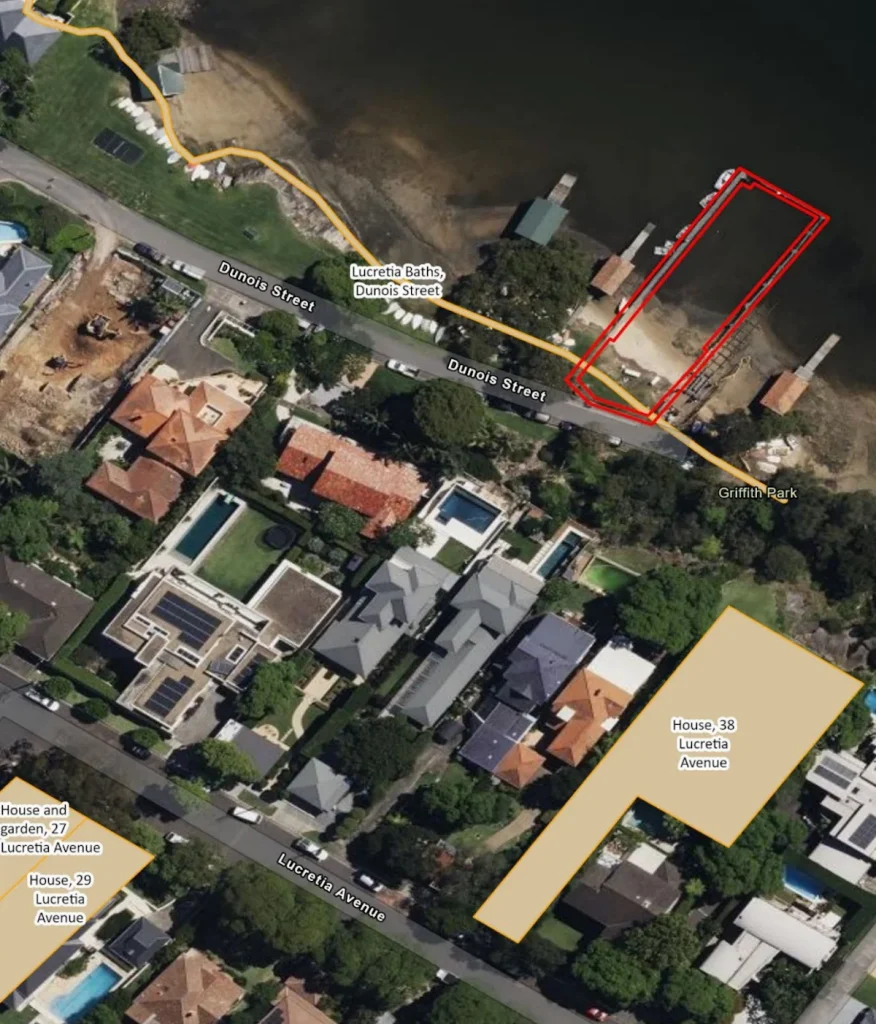
Demolition reaches into Woodford Bay
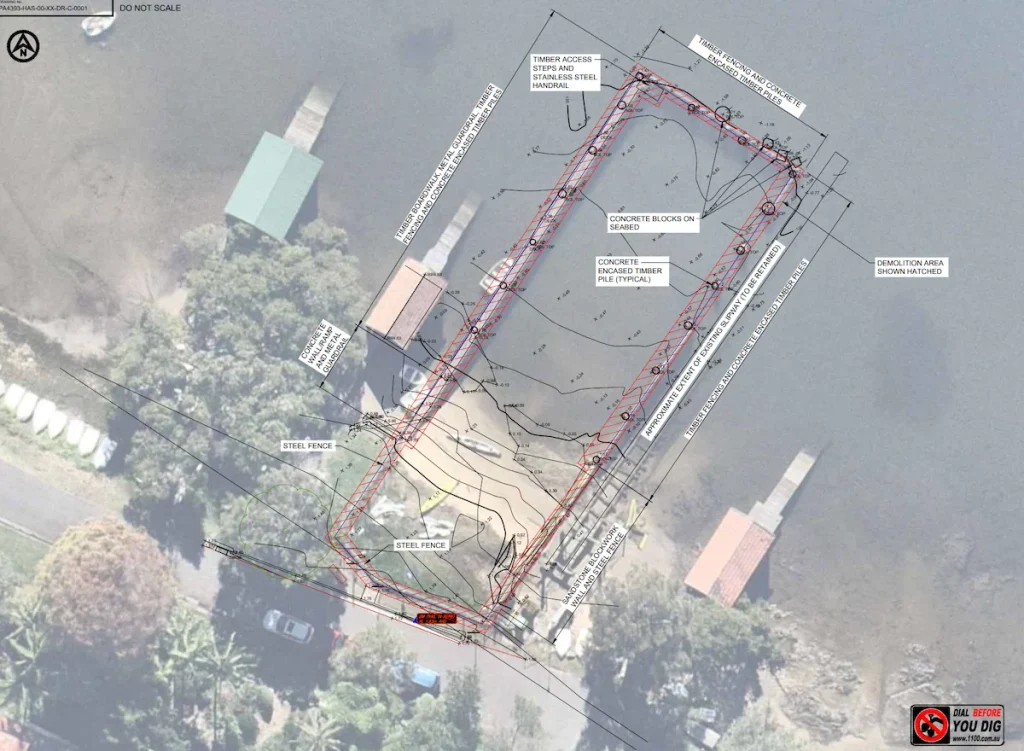
The proposal would remove concrete-encased timber piles, palings, the western boardwalk, steps and handrails, a concrete wall, an eastern sandstone wall and land-based perimeter fencing.
Heritage-significant material, including turpentine piles and decking, would be salvaged and conserved where feasible for potential reuse in interpreting the former baths. Demolition is expected to take about one to two months, subject to weather and equipment availability, using machinery that could include a small crane or excavator, floating barge and shallow-draft workboat.
Seahorse habitat brings safeguards
Marine surveys found patches and small beds of seagrass around the baths but no White’s seahorses during the site inspection. Parts of the structure were nevertheless identified as potential habitat for the threatened species.
Fisheries authorities require a management plan covering White’s seahorses and other syngnathids. Removed piles would be inspected and any animals found relocated under the required process. A permit would also be needed for impacts on seagrass and macroalgae, while another fisheries permit may be required for seabed disturbance caused by removing concrete blocks.
Foreshore future comes later
Council intends to rewild the foreshore after demolition and recognise the baths through heritage interpretation and oral history. Detailed rewilding works are not part of the current environmental assessment.
Removal would close a long chapter in Longueville’s swimming history, while the final form of the Woodford Bay foreshore remains for a later stage.
Published 20-Sept-2026